

What is the Equator Line and where is it located?
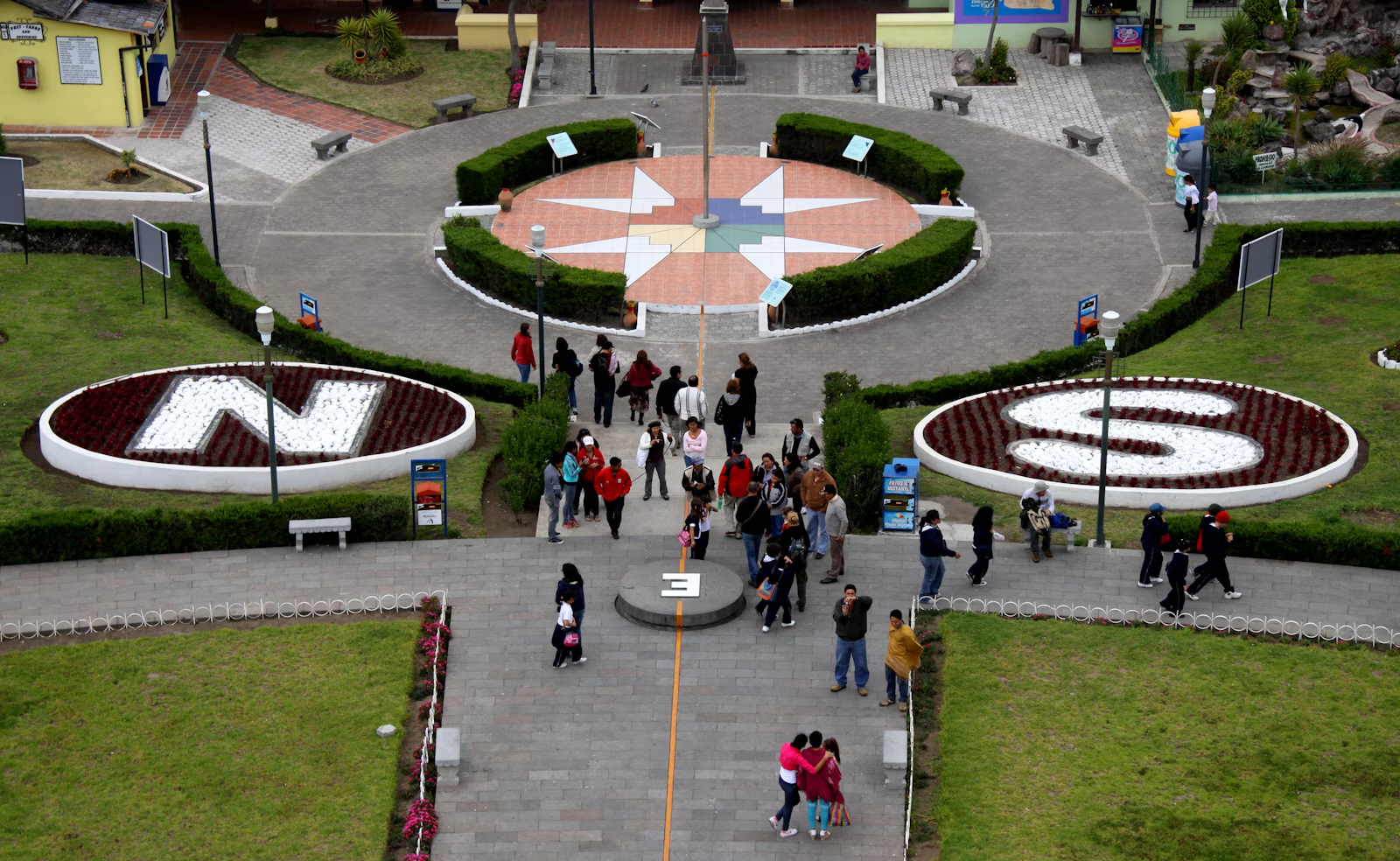
The Mitad del Mundo City is a thematic-cultural park in San Antonio de Pichincha, about 26 km north of downtown Quito. Its symbol is a 30-meter monument that pays tribute to the French Geodesic Mission of the 18th century, the expedition that measured the position of the equatorial line and was so significant that it gave the country its name.
In addition to the monument, the grounds include an ethnographic museum, a planetarium, a scale model of Quito, and several restaurants. If you go on a weekend, the central plaza usually has music and cultural events.
How to get to the Equator Line from Quito?
There are four ways to get there, depending on how much you want to spend and how much logistics you want to handle:
- Taxi or ride-sharing app: this is the most direct option. The trip takes between 20 and 30 minutes and costs approximately US$ 15 to US$ 20 per direction, depending on where you start from. Agree on the fare or return trip before getting in, because finding a taxi back in the area can be tricky.
- Public transportation: this is the most economical but also the most complicated. You take the Metrobús or Trolebús to the La Ofelia terminal in the north of the city, and from there a bus heading to Mitad del Mundo. Budget between 100 and 120 minutes total and just a few dollars. Our tip: at La Ofelia ask any terminal staff member for the right bus, they'll always point you to the correct platform.
- Hop-on hop-off bus: there are circuits that depart from northern Quito and stop at the Equator Line and the Intiñan Museum. They're convenient if you want to go without dealing with transfers; check current prices and departure times with the operator.
- Organized tour: this is the option that saves you the most time, because transportation and explanations are taken care of and, besides, you can combine the equatorial line with the Historic Center in a single day (we'll tell you how below). Check organized tour here.
Mapa interactivo
How much do tickets cost and what are the hours?
Admission to Mitad del Mundo City costs US$ 5 for adults and US$ 2.50 for children, seniors, and people with disabilities. The Intiñan Museum, which is a few minutes' walk away, has the same rate and is paid separately.
The grounds are open 365 days a year. According to the official website, hours are 9:00 a.m. to 5:00 p.m. Monday through Friday and 9:00 a.m. to 6:00 p.m. on Saturdays and Sundays. In any case, it's best to confirm before you leave, especially if you're going late. Prices and hours may vary during events and seasons.
What to see and do at the Equator Line?
With a morning you have time for the essentials:
- The monument: climb to its observation deck to see the Quito plateau from above. The must-take photo, with the line painted on the ground, is taken at the base.
- Ethnographic Museum: a tour through Ecuador's indigenous peoples, ideal for understanding the ancestral origins of the country.
- Planetarium and Quito scale model: two short stops, interesting for families with children.
- Intiñan Museum: for many, the most fun part of the visit. It's a guided tour of between 30 and 60 minutes with experiments on the line: balancing an egg on a nail, observing the Coriolis effect, and learning about traditions of peoples like the Salasaca and Waorani. At the end, you get a certificate for completing the egg challenge. Don't feel bad if the egg falls on the first try. It happens to almost everyone, and it's part of the charm.
Where is the true equator line, at the monument or at the Intiñan?
This is the most common question. The monument marks the point calculated by the French expedition in 1736, but GPS measurements promoted by the Intiñan Museum place the line about 240 meters away from there. Other sources warn that the rocky terrain makes it difficult to measure with precision.
Our recommendation is not to choose: visit the monument for its historical value and the Intiñan for the experimental part. They're a few minutes' walk apart, going slightly uphill along the road, and together they make for a complete visit.
Is it better to go on your own or on a tour?
On your own you spend much more time on transportation and miss the context of what you see. A tour makes sense if you want to make the most of your day: the Equator Line is on the outskirts and the Historic Center is in the opposite direction, so combining them without a car is usually complicated.
That's why we designed the City Tour and Equator Line, a 9-hour activity (from 7:50 a.m. to 5:00 p.m.) that combines the two sides of Quito:
- In the morning, Historic Center: Plaza Grande with the Presidential Palace, City Hall and Archbishop's Palace, the Cathedral, the Church of the Society of Jesus, and the San Francisco monastery.
- Then, heading north: the Equator Line monument, where you cross from one hemisphere to another over the equatorial line, and the Intiñan Museum, dedicated to the culture of equinoctial peoples.
Includes shared transportation and bilingual guide (Spanish and English). Departs from 2 passengers from the Historic Center (José de Antepara E4-60) and has free cancellation and rescheduling up to 3 days before. Does not include lunch or pickup at your accommodation. If you want more ideas to complete your trip, on our activities in Quito page you'll find other full-day excursions, such as Cotopaxi, Quilotoa, Mindo, or Otavalo.


Be the first to comment
Your comment opens the conversation