

Account of our visit to the Geysers of El Tatio, probably one of the most beautiful natural wonders on the planet.
About "El Tatio"
The geothermal field "El Tatio" is made up of 40 geysers, 60 hot springs and 70 fumaroles spread over an area of 3 km². In Quechua, "El Tatio" means "The old man who cries" and this old man is none other than the most important geyser field in South America and the third largest in the world, behind the famous Yellowstone in the United States and another in Russia called Dolina Giezerov, which I at least didn't know about before writing this post and surely several of you are learning about - by name - right now. And what characterizes "El Tatio"? - you might ask. Well, simply columns of steam and gases that are expelled through fissures in the earth and that sometimes exceed 10 meters in height, things you don't find just around the corner, right? These columns are, in reality, eruptions of water, the result of underground water colliding with a lava field, and when they mix they erupt reaching great heights. But they say a picture is worth a thousand words, so let's see one before moving on to the next section:

And a video... is worth how many images? You don't need to answer that question, here's a video we shot of our tour to the Geysers of Tatio:
Discovering the Geysers of Tatio
The geothermal field "El Tatio" is located just under 100 km from San Pedro de Atacama, the road is mostly gravel and as you travel it you gradually ascend until reaching over 4,000 meters in altitude; this combination of factors makes it difficult to visit on your own, added to the fact that the activity of the geysers - the main attraction of the area - begins with the first rays of sun and lasts only a short while. To see the geysers at their best and arrive before sunrise, the journey must be made at night, and it's also a demanding mountain road with no artificial lighting. Another thing you should consider is that it's very cold in the place, but since "very" or "little" is subjective, allow me to give you more objective information: the day we went to visit (in the middle of winter) the low reached -9°C, yes, 9 degrees below zero! And I'll tell you more, a couple of days before it had gone below -12°C. So know this and take the necessary precautions: bundle up! - as mothers and grandmothers say.
The magic of the geysers
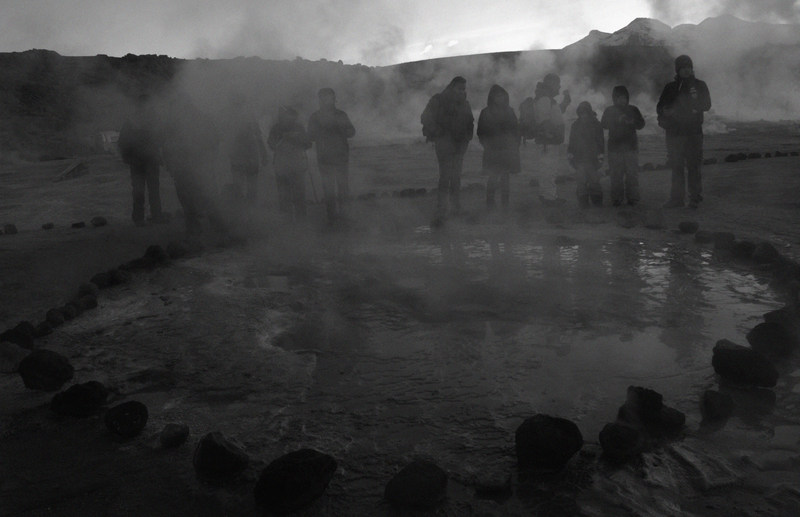
It's hard to find the words to describe the natural wonder that my senses processed to the point of ecstasy. Fortunately, you can help yourself with images and videos, because otherwise the task of words would be even more difficult for this young blogger. This is one of the first photos I took at sunrise:

As the sun rose, the colors and aromas kept changing. At the same time, the sun was giving us its warmth, a little more each minute, although I don't think it was until noon that the temperature of the place rose above 0°C to become a bit more pleasant. I felt privileged to be there, since it's not easy to get there. I made the most of that time that nature gave us of pure magic: large columns of water emerged from the earth at around 85°C in the form of steam and gases, reaching several meters in height, emitting a constant boiling sound. The air was pure, clean, but quite cool and with a bit of sulfur smell, a sign that what we were witnessing came from the depths of the earth. The visitors admired in awe, mostly in silence, making the occasional comment, some expression of surprise, but not much more. There we were clearly playing visitors and the local, nature, without a doubt. El Tatio is beautiful, very beautiful and unique, there are few places like this in the world.

A classic of the place: hard-boiled eggs "geyser-style"
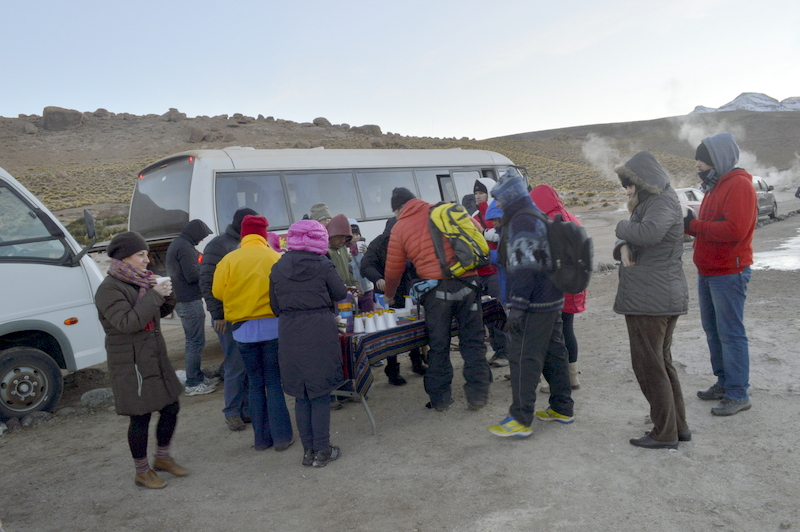
After admiring El Tatio, the guide - his name is Osvaldo by the way - along with Juan, the driver, prepared an excellent breakfast for us with infusions, sweet cookies, breads and cold cuts. What was different were the hard-boiled eggs made "geyser-style": it turns out that since the water comes out of the earth at more than 85°C, if you put eggs inside a plastic bag in one of the fissures where the almost boiling water comes out (it also comes out boiling in the form of steam), they cook in about 15 minutes, without having to light a fire naturally or artificially. Interesting, right? It's a must-do when visiting the Geysers of Tatio! Here you see us enjoying breakfast:
How to get to El Tatio
To be able to reach the geothermal field before sunrise, you have to leave the town of San Pedro de Atacama around 5:30 in the morning. This way, you can make the journey of almost 100 km of gravel at night and arrive a few minutes before 7 AM, so you can witness the spectacle in all its splendor for a good while.
As I mentioned, making that mountain road without natural light (or artificial) is not a task for just anyone, so it's good to trust an experienced driver, like the one who took us, rest a bit and then wake up to explore the place, treasuring moments in your memory and in the form of photos, of course.
In the hot springs of El Tatio
As if seeing those geysers weren't enough, the place also has natural hot springs with waters that have excellent properties for our bodies, found at temperatures around 30°C. The thing is, as you probably know, our body temperature is higher than that, so when you get into waters at 30°C at El Tatio, where outside temperatures were hovering around 0°C, it wasn't easy—it was actually quite cold. But that was only at first, because after a few minutes I felt like a fish in water, happy and with a spectacular sense of relaxation. As you can see in the following photo, there weren't many brave souls among all the visitors in the area who dared to enjoy the experience:
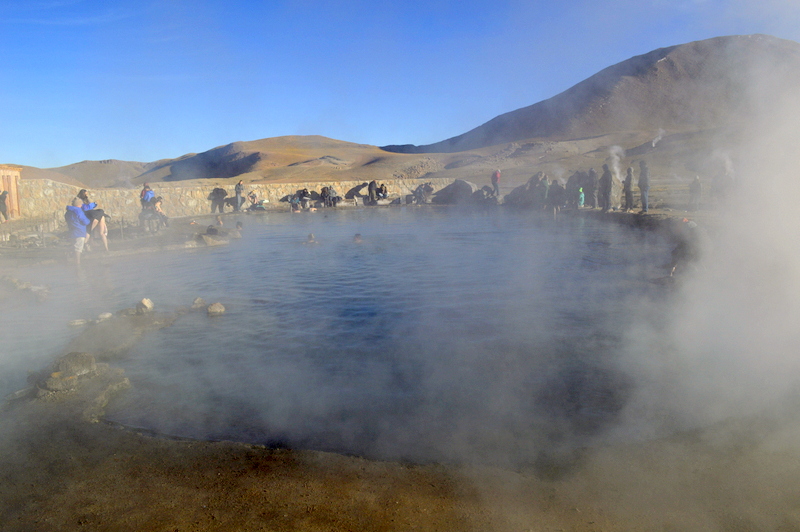
My girlfriend and I took the plunge, though the cold forced her to get out quickly. As for me, I enjoyed the water until the very last moment, when we were called to board for the return trip, which would have two stops.
Bonus Track: Brief Stop in Machuca
On our way back, we would make a stop in Machuca, a village whose population doesn't exceed double digits. But first, we stopped at a viewpoint with a beautiful landscape:

Now then, let's see Machuca:
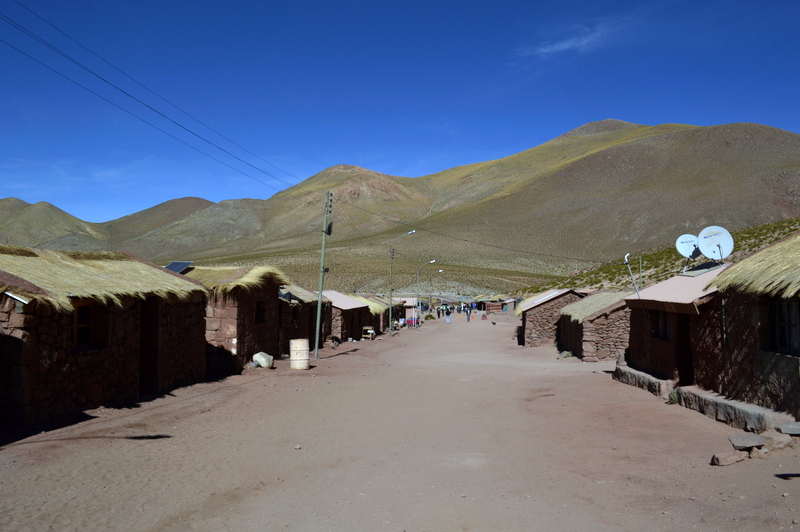
What you see is an Atacameño village whose population we were told is 15 permanent residents, though it has a large number of daily visitors, as it lies on the route between El Tatio and the town of San Pedro de Atacama. You have to give Machuca credit for a certain charm, with its adobe houses, thatched roofs, and the peace of its inhabitants. Here's what one of the village's typical houses looks like up close:
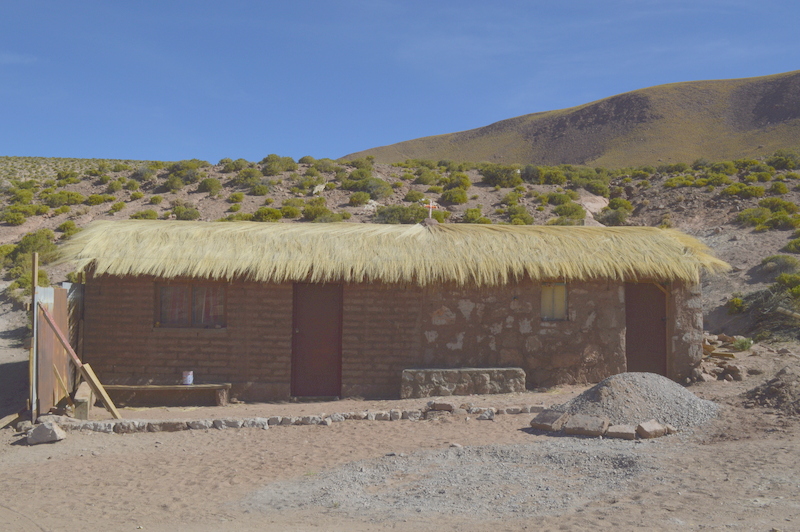
And here's what its church looks like:
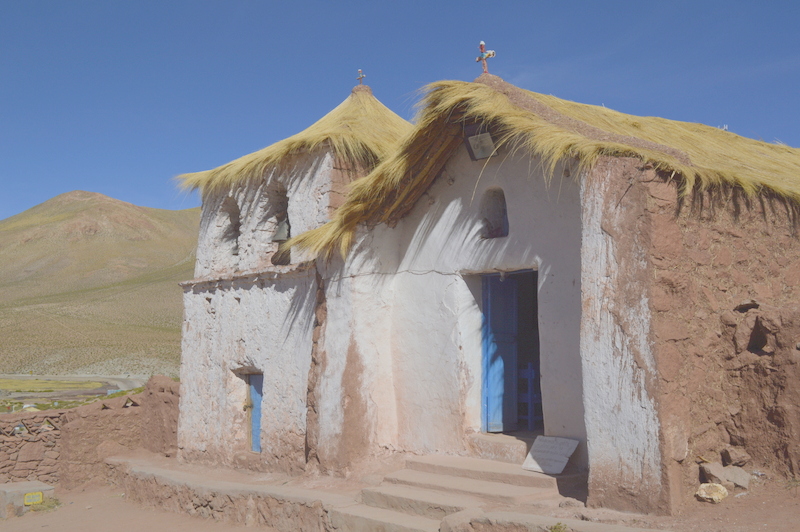
If you happen to pass through there, the recommendation is to try the llama meat empanadas. My girlfriend and I don't eat meat, so we preferred not to try them, though we did have a cheese one that was really good, so allow me to rate them as "must-tries." This has been the account of our experience with nomades.com, I hope you enjoyed it! If you're interested, you can find schedules and more information about the tour to the Geysers del Tatio here.
If you liked this article, give us a "Like" on our Facebook Fan Page or follow us on Twitter to be the first to see similar articles about tourist activities and outdoor adventures!
On nomades.com, you can find all the attractions and tourist activities in San Pedro de Atacama, always at the best price and booking comfortably from your home.
If you liked this article, reward us with 5 stars!


Be the first to comment
Your comment opens the conversation